

Can you feel the pressure of the Corona crisis taking its toll on you? Welcome to ambiguity. What is ambiguity? Put simply, ambiguity is the lack of clarity. Here comes the good news: We can all learn to cope better with overwhelming ambiguity! The key is what researchers call your “ambiguity tolerance”. We offer you a list of 5 things to do to help you to adjust your tolerance of ambiguity.

Trust in Potential means to inspire courage, to nurture collective wisdom and to commit to learning along the way (for yourself and those around you!). Trusting in others’ potential means we have to be willing to relinquish control and see what happens when people are given the space for transformation to unfold. When we lead in ambiguity, we become facilitators of transformation. In essence, we must recognize that as we make progress in our efforts to change the status quo, we are also changing ourselves- how we feel, think, and do. As we do the work of transforming the system, the system responds and transforms us. It’s a reflexive cycle where the individuals and the system continually influence each other.

Prototyping progress means evolving through learning and experimenting and creating our path forward guided by a strong, shared vision. Even when our world is shifting it is possible to avoid stagnation and capitalize on opportunities. That is why in our experience prototyping progress is especially important in uncertainty. However, we often try to escape this uncomfortable feeling with things that we believe make us feel better, more comfortable, more familiar. We have identified three common examples of self-soothing behaviors that prevent progress in ambiguity.
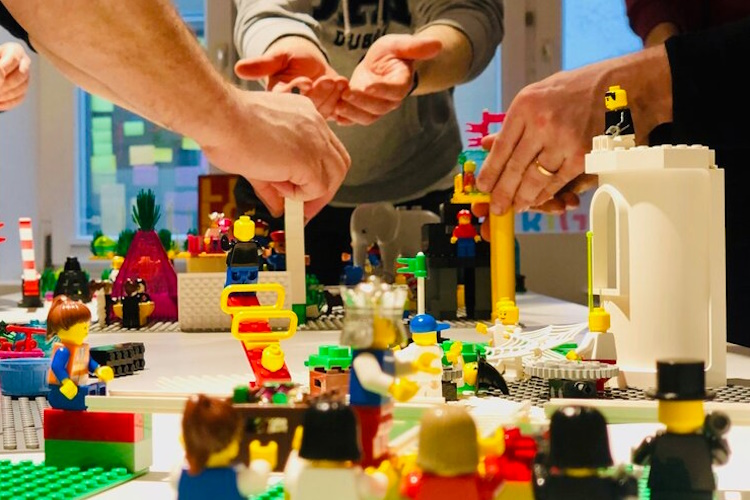
In ambiguity, we are in uncharted territory with lots of missing pieces of information. Only when we direct our cognitive attention to the multiple possibilities in an ambiguous situation, we can explore this room for new potential. When we want to focus on the possibilities in uncertainty, we have to make an extra effort to visualize the new ideas or a vision. We have to build a case for the new thinking that we want to activate in people’s heads. We need to see and feel on the outside what we are imagining on the inside. We visualize the invisible.

Here comes the 3rd of a six-part series about our approach to making the most of ambiguity by embracing six simple principles: Aim for Insights. Aim for Insights means to look beyond what is obvious and prioritize meaning making. To face ambiguity with confidence, we have to develop the ability to extract what is essential and novel then transform it into something actionable. Finding possibilities in ambiguity is about moving from mess making to meaning making. You can start practicing this principle right away after reading the article!

We define ambiguity as the uncertainty of possibilities. This uncertainty creates tension. Ambiguity isn't always a choice, and sometimes the resulting tensions can't be released for a very long time. The corona crisis is THE big example currently. But also beyond COVID, no matter where you work or live, it’s impossible to ignore the rising tensions. Every change in an organization, agile transformation, or innovation is a journey through ambiguity. The new and necessary expertise is to facilitate that in a co-creative way. Leveraging tensions is a learning journey with a deep value for navigating ambiguity. Just start with curiosity!

Ambiguity navigation is rarely a solo sport. Our NEW post is the first of a six-part series on our six principles for Ambiguity Activism: Grow Together means that collaboration works well when everyone can freely choose to engage because they care about the cause. Because there is no movement without collaboration and there is no collaboration without purpose. Ambiguity is the new normal. Every day we face more uncertainty with things that we simply can’t control: where (or if) we work, how we get to interact with loved ones, what qualifies as news and truth, the list goes on and on. How might we find a direction in this confusion? How do we avoid getting lost? Fortunately, there are things that we can control, it is possible to develop a mindset for facing ambiguity with these secret ingredients: togetherness, hope, and agency.
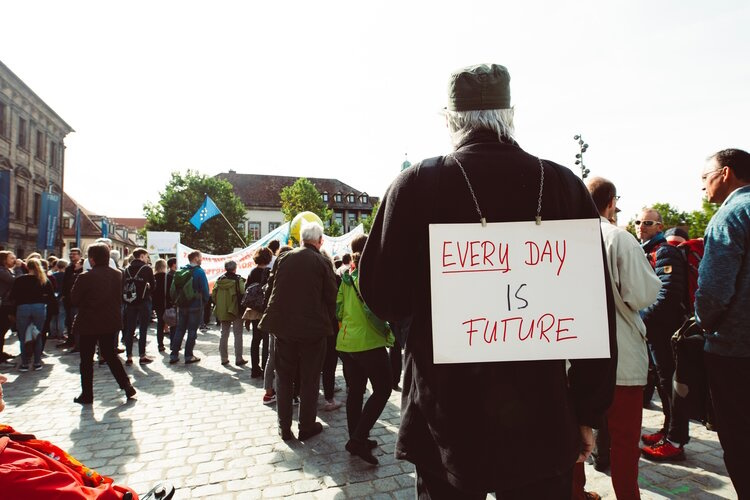
Nearly five decades ago Herbert Simon wrote “to design is to devise courses of action aimed at changing existing situations into preferred ones.” Though he was describing design, he may as well have been talking about ambiguity activism which is, fundamentally, a commitment to taking actions in uncertainty that produce positive change. Activism involves deliberate efforts to ensure that we don’t continue to make the same mistakes in the future that we realize we are making today. So essentially, ambiguity activism is a form of transformation design.

Collaboration is challenging. Acting in ambiguity is challenging. Collaborating in ambiguity? Whew! Super challenging! Rather than focusing on protecting the old, teams in ambiguity are often on what we call a “rollercoaster ride into the new”. This cyclic adventure travels through loops of opportunities to co-create, experiment, reflect, learn, and make decisions about what to do next. Activating ambiguity thus requires different skills than managing a working system. It requires an activist approach. The goal is to co-create the process of transformation. And to enjoy it! Leading in ambiguity is not about managing for specific outcomes, it is about facilitating for transformation.

Over the years we’ve observed patterns in the way that people orient to ambiguity. These orientations are often situation-dependent, rather than consistent personality traits. Understanding diverse ways of responding to ambiguity has helped us diagnose obstacles to progress and foster better teamwork and more innovative outcomes.
NewsSem-OSD2023-10-18T00:23:40+02:00